No real news
Pistons and liners
We've been busy for the last few weeks but there's only so many photos of cleaning and painting you can take. Today was spent being a CAD monkey and here's some screen shots of the results.
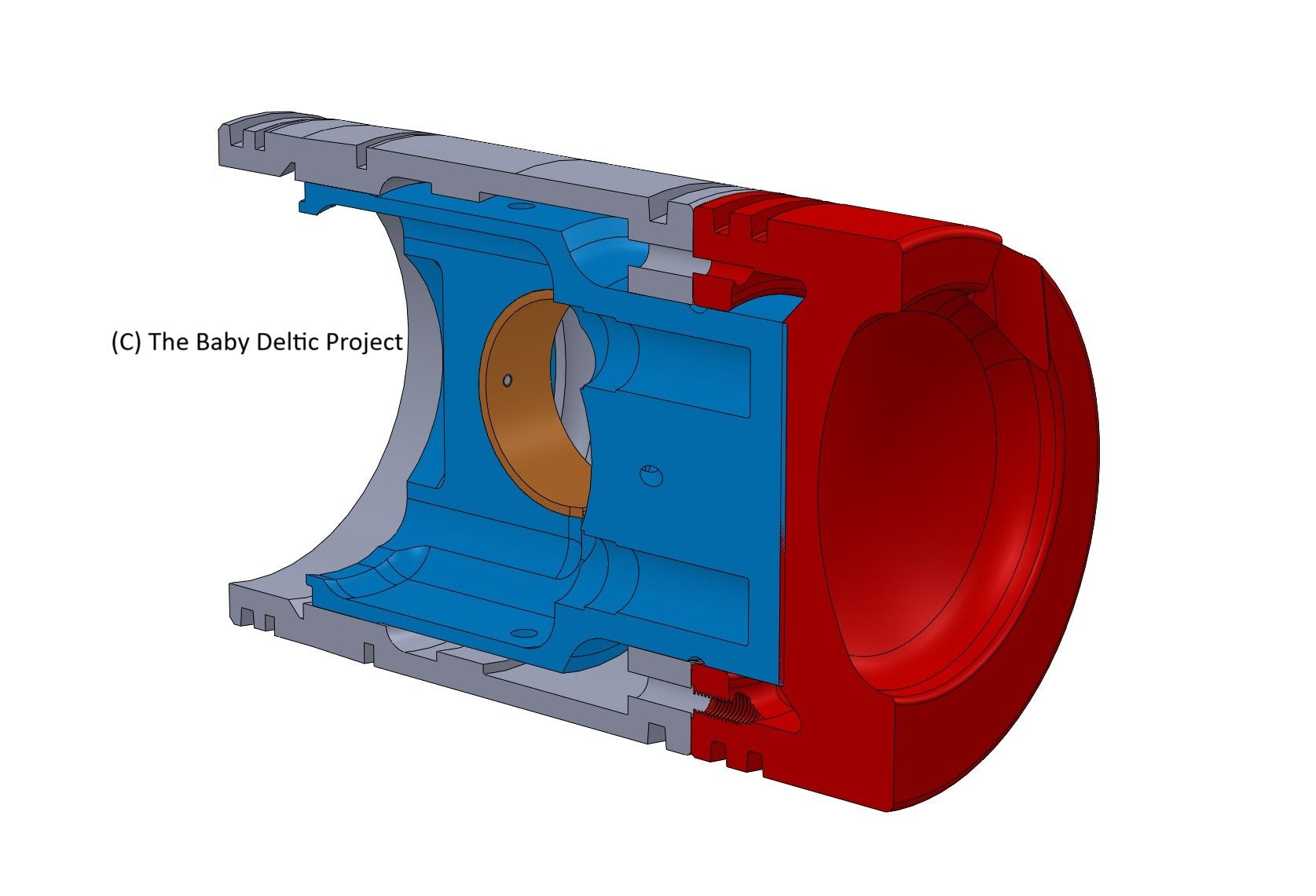
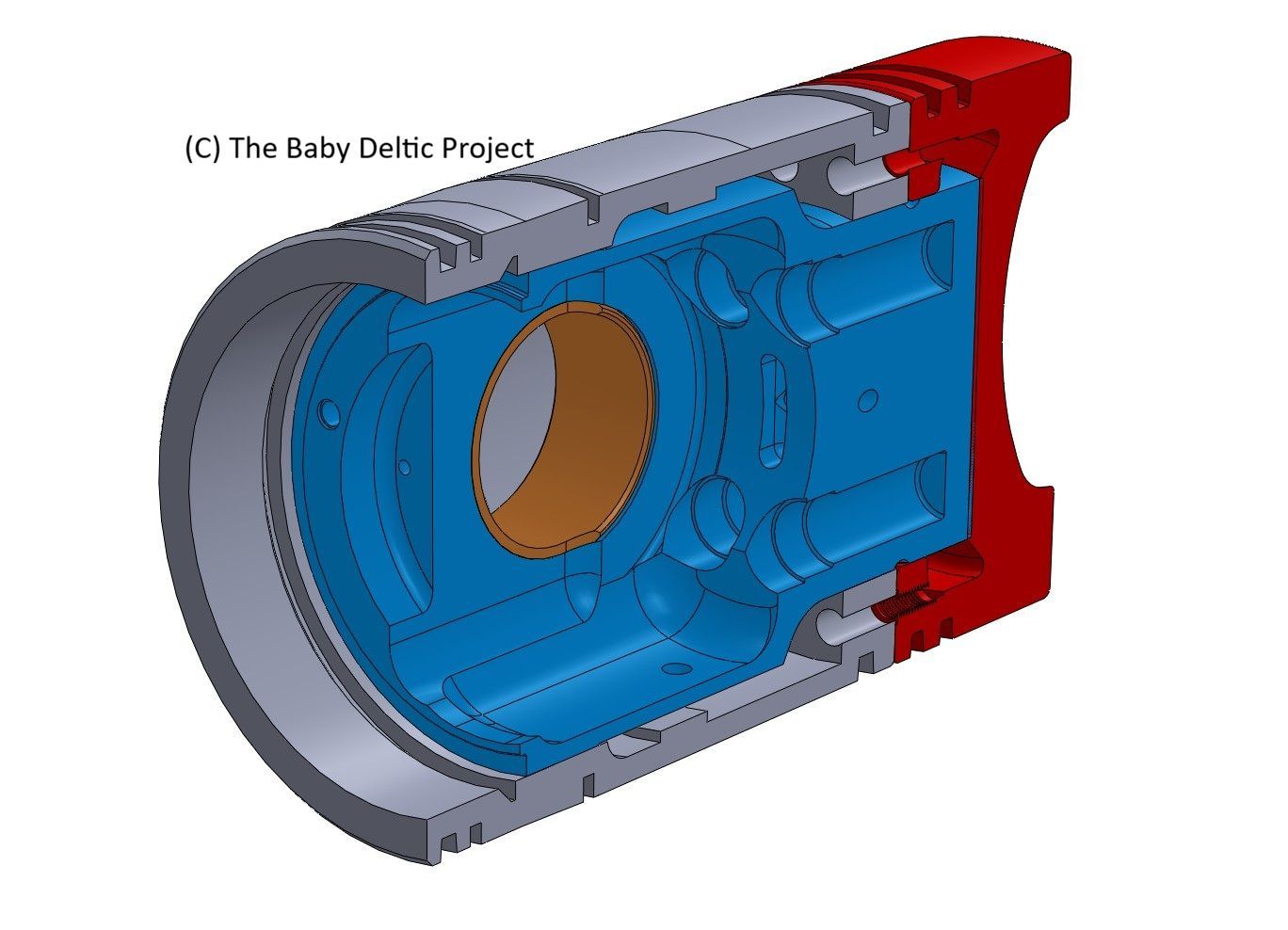
The first two are of a piston assembly. The pistons on Deltics are not simple, they're an assembly of three major parts all of which are shown below. The pistons are different according to whether they're inlet or exhaust pistons and the exhaust pistons are different between A bank and B & C banks. Of course they are.
The piston body (grey) is an Aluminium hollow forging (extrusion) machined to very fine tolerances (+/- 0.0001" in places). It has external groves for four of the piston rings, these act to seal the compression gases in the combustion chamber and to scrape the oil from the cylinder walls. They don't scrape oil particularly well...
The piston crown (red) is machined from an alloy called Hidural 5 which costs more than gold / saffron / etc. The crown has grooves for the other two piston rings. The bowl in the crown forms the combustion chamber with the other piston in the same liner (not shown), the slot in the edge of the bowl is where the fuel is injected just before top dead centre. The crown is bolted to the piston body with 10 studs (not shown below). This is the Mk IV piston, earlier pistons were screwed (and locked with pegs) to the crowns and they came loose and then came off with monotonous regularity. Baby Deltics weren't around for long enough to get Mk IV pistons but with the 18-25B engines in Class 55's it took Paxmans (because it was Paxmans by then) until the mid-1970s to get enough of these pistons to enable BR to start to have some confidence that the pistons were going to reach their overhaul life without the crowns becoming detached.
The final major part is the Gudgeon Pin Housing (GPH) (blue) like the piston body this is Aluminium. It is attached to the piston body by willpower alone, or so it seems. Actually there's a taper circlip on the lower extremity of the piston body which locks the GPH to the body and there is a bit of interference fit too. Willpower is probably stronger.
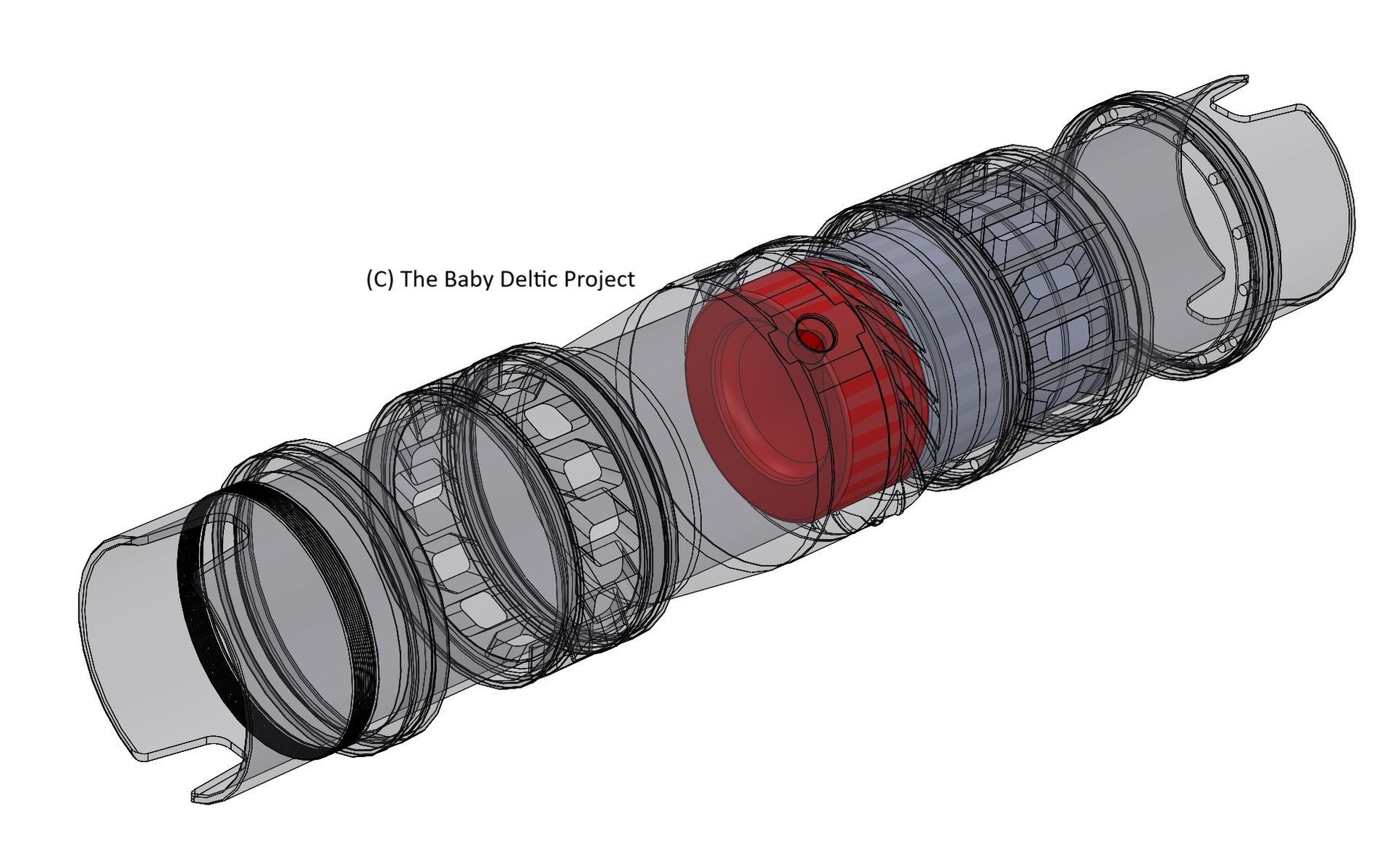
The image below is the piston assembly in its position in a cylinder liner. You can see where the fuel injector hole lines up with the slot in the piston crown. The piston is more or less at top dead centre, the annular ports in the liner are (towards the left) for inlet air (towards the right) for the exhaust gas. You can see how the piston body covers the exhaust port in this position, as it moves outwards on its power stroke it will uncover the exhaust port as it nears bottom dead centre, the inlet piston works in the same manner and covers / uncovers the inlet port. This is why Deltics don't need conventional valvegear.